YELLOW CAKE: THE DIRT BEHIND URANIUM
The film accompanied for five years the world's largest sanitation project in the history of uranium mining and takes the viewers to the largest uranium mines in Namibia, Australia and Canada. At that time the world market for uranium changed in a dramatic way. More than thirty new nuclear power plants are now in the process of being built, and about 150 more power plants are being planned worldwide. Uranium has advanced to become one of the most sought after resources in the world. While shooting the film, the price for uranium on the world market increased twenty times.
2010, Germany, 108 min.
Prod.: Joachim Tschirner, Klaus Salge
Script / Dir.: Joachim Tschirner |
Dir. of Phot.: Robert Laatz
Music: Fred Kruger
Sound: Mario Kohler, Marc Witte, Marc von Sturler
Edit.: Joachim Tschirner, Burghard Drachsel
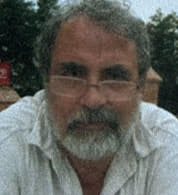
Joachim Tschirner
Born in 1948 in Wittenberg, Germany, Joachim Tschirner studied at the Aesthetics and Cultural Theory Department of Humboldt University from 1970 to 1974. He began his career in 1975 as a documentary editor at DEFA Studio in Berlin and transitioned to directing in 1980, completing approximately 30 documentaries. In 1991, he co-founded the author's association and production company Um Welt Film, and in 1996, he established and led the aid organization Water for the Children of the Aral Sea.
Filmography
Canto General (1983), Say: Heaven. Even When There's None (1984), Katrin (1987), Born to See (1988), Both Sides of the German Border (1989), A Small Piece of Germany (1991), Don't Say Goodbye - Just Go (1991), On the Seventh Day over the Syr Darja (1992-1995), The Aral Sea - Where the Water Ends, the World Ends (1998), Toxic Ships - The Story of a Colorless Substance (2001), Fordlandia - The Forgotten City in the Rain Forest (2002), The Wismut's Missing Villages (2006), Terra Incognita - Die Wismut (2003-2007), Yellow Cake: The Dirt Behind Uranium (2005-2010).